Why February is the best time to get your HVAC serviced
Lifestyle

Audio By Carbonatix
2:00 PM on Tuesday, February 17
By Kelly Soderlund for Samsara, Stacker

Why February is the best time to get your HVAC serviced
If you wait until summer to think about your HVAC system, you’re already late.
New data analyzing more than 65 million HVAC service visits across the U.S. shows that February is consistently the slowest month of the year for HVAC technicians—making it the easiest, least stressful time for homeowners to schedule service.
By March, demand starts rising. By summer, HVAC crews are stretched thin. And later in the year, service backlogs intensify as systems work harder.
If you want to avoid long wait times and last-minute breakdowns, February is your window. In this article, Samsara examines national HVAC service patterns and what they mean for homeowners.
February Is the National Low Point for HVAC Demand
HVAC service demand follows a predictable annual cycle. The point that matters most for homeowners is when that cycle bottoms out—because lower technician workload means more appointment flexibility and fewer delays.
Across the U.S., February sits at or near the lowest level across every operational measure.
Average US HVAC Activity by Month (Per Vehicle)
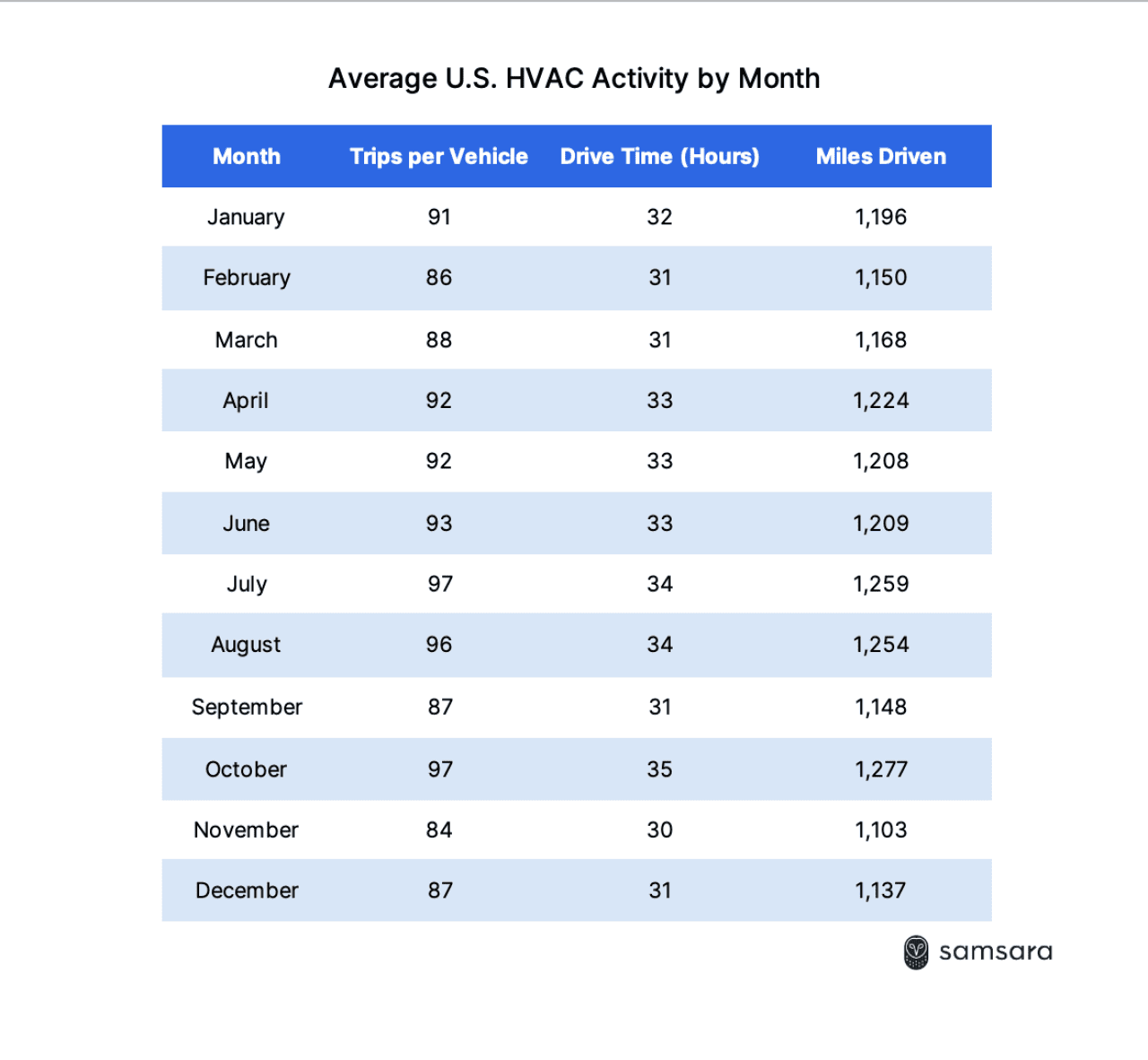
February is the only month that is lowest across service visits, drive time, and miles driven. Once March begins, activity climbs steadily and remains elevated for most of the year.
Only 2 States See February Above Their Typical Workload
Comparing each state’s February activity to its own yearly average shows that the late-winter slowdown is widespread. Only Alaska and Hawai’i record February workloads above their normal monthly levels.
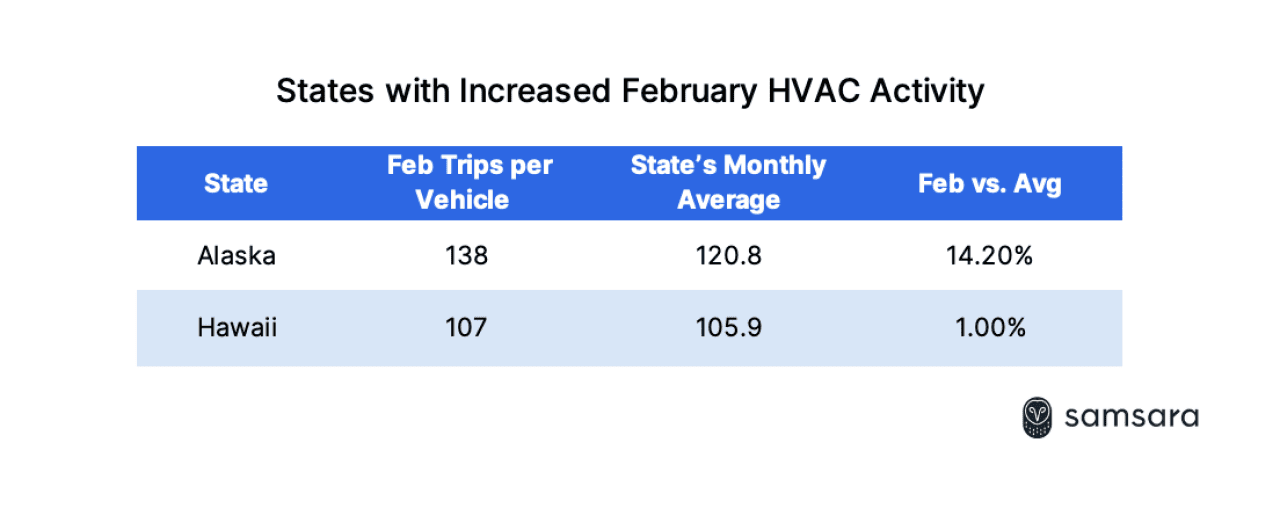
Alaska’s increase reflects concentrated winter heating demand and long service distances, while Hawai’i’s small lift reflects steady, year-round usage. In the rest of the country, February activity sits at or slightly below typical levels—creating the only point in the year when demand eases nationally before rising again in spring.
Demand Begins Climbing Immediately After February
February is not just the slowest month—it is the inflection point before activity begins to rise again.
In the national data, HVAC technicians average 86 trips per vehicle in February, the lowest level of the year. That figure increases to 88 in March and 92 by April, marking the start of a steady climb that continues into summer, when activity reaches 97 trips per vehicle in July.
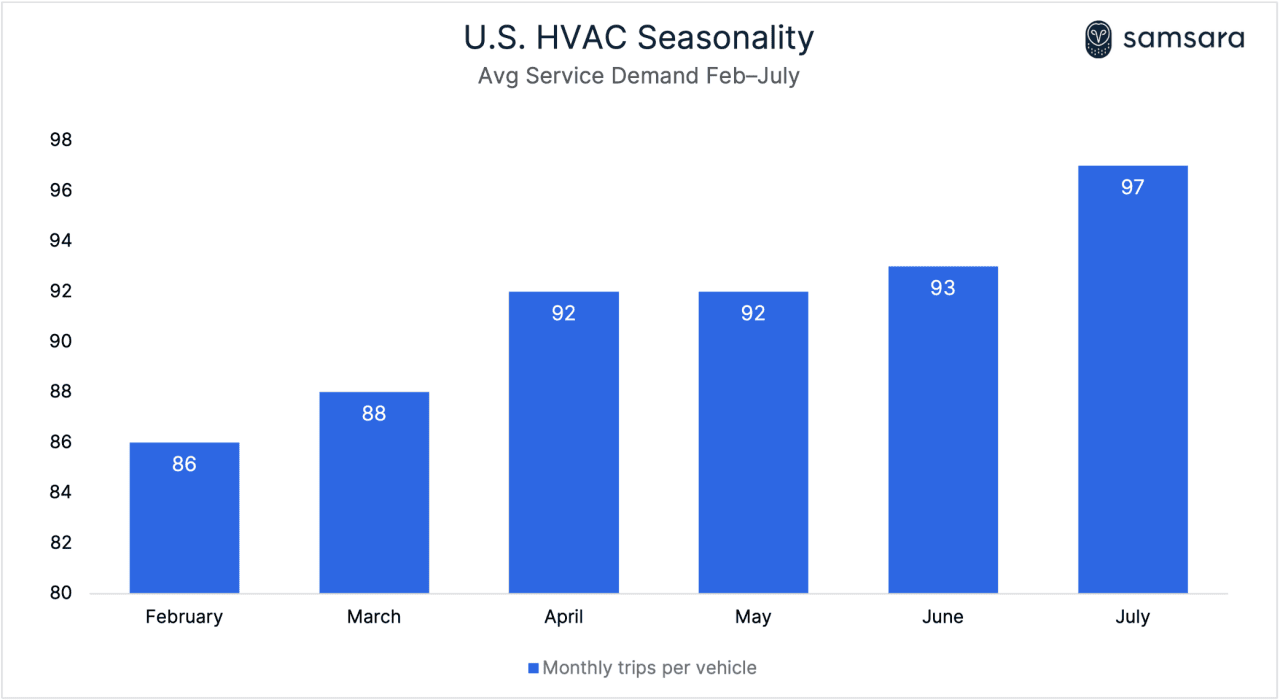
This gradual but consistent increase shows how quickly the late-winter lull gives way to heavier workloads. Once March begins, demand does not return to February levels for the remainder of the year.
Lower Demand Often Means Less Pricing Pressure
While the dataset tracks operational activity rather than service pricing, the workload patterns help explain why timing affects what homeowners ultimately pay. February’s lower trip counts and reduced drive time indicate greater scheduling capacity, which reduces the likelihood that service must be handled as an urgent or after-hours call.
Consumer cost benchmarks reflect that same dynamic. Estimates compiled by Angi and HomeAdvisor show routine HVAC diagnostic visits typically range from $75 to $200 during slower periods but can climb to $300 or more during peak demand, with emergency or expedited service often costing 20%-40% more.
With technicians handling fewer jobs in February, homeowners are more likely to secure standard scheduling rather than peak-season service windows that carry higher costs.
What Homeowners Can Do in February
- Schedule preventive maintenance while technician availability is highest.
- Address small issues before spring demand ramps up.
- Avoid competing with peak-season service backlogs.
- Give older systems a checkup before sustained seasonal use.
The Bottom Line
February is when HVAC demand is lowest nationwide, and activity rises steadily afterward as systems return to heavier use.
For homeowners, acting during this quieter window can mean easier scheduling, fewer delays, and a better chance to handle maintenance before the year’s busiest stretch begins.
In HVAC, timing matters, and February is when the calendar works most in your favor.
This story was produced by Samsara and reviewed and distributed by Stacker.